The most ambitious technologies of our time depend on something largely invisible: the computing infrastructure that lets researchers test ideas, businesses build products and public institutions respond to complex challenges. High-performance computing and artificial intelligence can help forecast weather, study disease, advance scientific research and create new industries. But their promise depends on access: to powerful systems, skilled people and the expertise to put both to work.
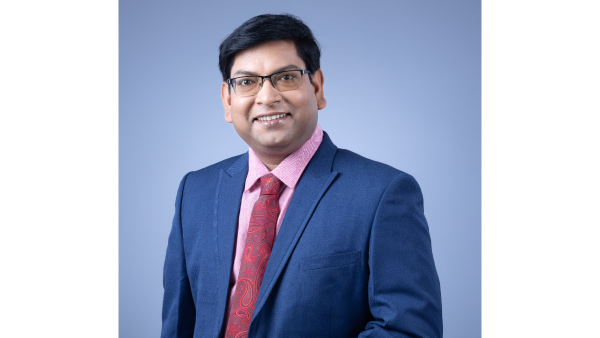
For more than two decades, Abhishek Das has worked at this intersection of technology and public purpose. A researcher, scientist and inventor in high-performance computing (HPC) and AI, he has helped design and deploy computing systems across India’s research and academic institutions. Now CEO and Managing Director of Accelerate Compute India Pvt Ltd, he brings experience spanning national missions, technical leadership and the practical work of building infrastructure.
His career offers a useful perspective on what it takes to turn technological ambition into capacity. A supercomputer is not simply a collection of processors. It must be designed for real workloads, connected to fast storage and networks, supported by software, and made usable by the people who need it. Das’s work has involved these layers—from architecture and deployment to applications, training and outreach.
From powerful machines to public capability
Das has contributed to India’s National Supercomputing Mission (NSM), National Monsoon Mission (NMM) and IndiaAI Mission. Across these efforts, a recurring theme is the widening of access: building shared infrastructure and helping institutions make meaningful use of it.
Under the NSM, he was involved in the conceptualisation, design and implementation of PARAM Siddhi-AI, described in the biodata as India’s first scalable supercomputer for machine-learning and deep-learning computing. Commissioned in 2020, the system was built to support AI research, data analytics and scientific computing. His work also included implementation of PARAM Shivay at IIT (BHU), the first system commissioned under the mission’s Build Approach, and several systems manufactured in India at institutions including IIT Roorkee, IIT Gandhinagar and the National Agri-Food Biotechnology Institute.
Another defining milestone was his contribution to the development of AIRAWAT – AI Research Analytics and Knowledge Dissemination Platform at C-DAC supported by AI & Emerging Technology Division of Ministry of E&IT. He was involved in the design, architecture and implementation of its 200 AI-petaflops proof-of-concept infrastructure. Integrated with PARAM Siddhi-AI, the combined platform represented 410 AI petaflops of mixed-precision peak computing capacity. The system received international recognition through its 75th-place ranking in the TOP500 list announced at the International Supercomputing Conference in 2023. The larger vision behind AIRAWAT was to establish a common computational platform connecting research institutions, academic organisations, scientific communities, industry and startups. It was a step towards making advanced AI computing an enabling resource for India's wider innovation ecosystem.
The importance of such projects extends beyond headline performance figures. A national computing facility can give researchers access to tools that would be difficult for a single university or laboratory to build on its own. Deployments at institutions across regions can help create a broader research base—provided that people also have the software, training and support to use the systems effectively.
That is the practical side of technological sovereignty: not only acquiring advanced hardware, but building the knowledge and capacity to operate it, adapt it and develop applications suited to local needs.
Connecting computing to real-world questions
The value of computing infrastructure becomes clearest when it is connected to consequential problems. Das served as principal investigator for a National Monsoon Mission project focused on porting and optimising the Climate Forecast System model. The work aimed to improve performance and usability, supporting research related to rainfall prediction and climate modelling.
He also coordinated SAMHAR-COVID19, a 2020 initiative that brought supercomputing, AI, machine learning and healthcare analytics to research questions arising during the pandemic. The programme invited work on outbreak forecasting, drug discovery, genome sequencing, medical imaging and other areas. It reflected a broader lesson: shared computational resources can help researchers explore urgent questions faster when technical infrastructure and scientific collaboration come together.
Other projects have supported atmospheric research, genomics, drug discovery, engineering and life sciences. The applications vary, but the underlying idea is consistent: computing should help people do better research and solve problems, rather than exist as an end in itself.
Making AI infrastructure more accessible
As AI has grown more resource-intensive, access to compute has become a central question for researchers, startups and institutions. In his work with the IndiaAI Mission’s Compute Capacity vertical, Das contributed to building a common computational platform drawing on resources from multiple empanelled industry partners. The biodata describes a platform spanning more than 38,000 GPUs across different compute and memory categories, with the goal of making AI resources available at affordable rates to a broad range of users.
He also coordinated development of the IndiaAI Compute Portal, intended to help users access compute, storage, memory and AI platform services. The portal’s promise lies in reducing the distance between an idea and the resources required to explore it. Students, academics, scientists and startups should not need to belong to a small number of well-funded organisations to begin developing AI tools and models.
This is a significant ambition, and its success depends on more than infrastructure alone. Affordability, usability, dependable service and opportunities to build skills all shape whether access is meaningful. Das’s experience across hardware, software, systems deployment and institutional programmes positions him to speak to these connected challenges.
His contribution to the IndiaAI Expert Group’s work on a tiered compute model also reflects a systems view of the problem: different AI workloads need different kinds and scales of computing. A thoughtful infrastructure strategy has to accommodate high-end training, mid-range use and inference closer to applications. Planning for those needs helps frame AI capacity as an ecosystem rather than a single facility.
A thought leader grounded in implementation
Thought leadership in technology is most persuasive when it grows from experience. Das’s record spans technical research, mission planning, programme direction and deployments at universities and research institutions. He has held scientific and leadership roles at C-DAC and served as General Manager of the IndiaAI Compute Capacity vertical at Digital India Corporation. His research publications cover topics including GPU computing, quantum computing, climate and scientific applications, and performance optimisation. His recognitions include the Joseph Fourier Prize for scientific excellence in advanced computing and AI.
These experiences give him a distinctive vantage point on the questions facing India’s digital future: How can the country build advanced systems while strengthening domestic capability? How should shared compute be distributed? What makes AI infrastructure genuinely useful to researchers and entrepreneurs? And how can performance goals be balanced with energy efficiency, affordability and long-term sustainability?
The answers require technical depth, institutional coordination and a willingness to invest in people as well as machines. Das’s career speaks to the importance of bringing these dimensions together.